Advanced Clinical & Laboratory Training in Reproductive Medicine
The 14-Day Intensive IVF Training Fellowship provides focused training in assisted reproductive technology, infertility management, embryology and ART laboratory practice.
Designed for professionals with relevant medical or life-science backgrounds, the fellowship combines clinical case discussions, fertility-unit observership, laboratory sessions and procedural demonstrations. The program follows the IVF cycle from initial assessment and treatment planning through fertilization, embryo development, transfer and cryopreservation.
Fellowship Overview
The program is structured to connect clinical decision-making with laboratory practice, giving participants an understanding of how different teams and stages of an ART cycle work together.
- Duration: 14 Days
- Format: Clinical, Academic & Laboratory Training
- Focus: IVF, ART, Embryology & Reproductive Medicine
- Training Mode: Case-Based Learning, Clinical Observership & Practical Sessions
- Assessment: Written Assessment & Case Presentation
- Certification: Fellowship Certificate
What the Fellowship Covers
- Infertility evaluation and treatment planning
- Controlled ovarian stimulation and cycle monitoring
- IUI and male infertility management
- Semen analysis and sperm preparation
- IVF and ICSI
- Oocyte and embryo assessment
- Embryo culture and blastocyst development
- Embryo transfer
- Vitrification and cryopreservation
- PCOS and endometriosis in ART
- Surgical sperm retrieval
- Donor programs and third-party reproduction
- ART ethics and regulatory considerations
- IVF laboratory workflow
- Evaluation of unsuccessful IVF cycles
14-Day Training Curriculum
Module 1 - Clinical Assessment & Treatment Planning
Days 1–3
The opening module establishes the clinical foundation required for ART practice.
Day 1 - Infertility Assessment & ART Fundamentals
Evaluation of infertile couples, relevant investigations, treatment options, ART indications and the overall IVF pathway.
Day 2 - Ovarian Stimulation Strategies
Gonadotropin use, stimulation approaches, protocol selection and considerations for individual patient profiles.
Day 3 - Cycle Monitoring & Trigger Management
Follicular monitoring, hormonal assessment, trigger timing and luteal support, supported by clinical case observation.
Module 2 - Andrology & Insemination Techniques
Days 4–5
The second module focuses on the male-factor component of infertility and laboratory preparation for insemination.
Day 4 - Male Infertility & Sperm Retrieval
Semen assessment, azoospermia, sperm preparation and retrieval procedures including PESA, TESA and TESE.
Day 5 - IUI & Sperm Processing
Patient selection, ovulation timing, laboratory preparation of sperm and the clinical workflow of intrauterine insemination.
Module 3 - IVF Laboratory & Embryology
Days 6–8
Participants are introduced to the technical environment of an ART laboratory and the processes involved from oocyte collection to embryo transfer.
Day 6 - IVF Laboratory & Oocyte Handling
Laboratory standards, culture conditions, oocyte identification, grading and principles of conventional IVF.
Day 7 - ICSI & Sperm Selection
Indications and workflow of ICSI, sperm-selection approaches such as PICSI and IMSI, and fundamentals of fertilization assessment.
Day 8 - Embryo Development & Cryopreservation
Embryo culture, blastocyst development, embryo grading, vitrification and preservation of embryos and oocytes.
Module 4 - Advanced ART & Clinical Integration
Days 9–14
The final module brings together complex infertility management, advanced ART concepts and the practical aspects of running a fertility service.
Day 9 - Complex Infertility Cases
ART considerations in PCOS, OHSS risk, endometriosis and the role of laparoscopy and hysteroscopy.
Day 10 - Donor Programs & Reproductive Ethics
Egg and sperm donation, third-party reproduction, surrogacy, regulatory considerations and ethical decision-making.
Days 11–12 - Practical Laboratory Sessions
Focused laboratory training covering semen analysis, sperm preparation, oocyte handling and embryo assessment through appropriate practical or simulated exercises.
Day 13 - IVF Practice & Case Review
Integration of clinical and laboratory workflows, assessment of unsuccessful IVF cycles, patient communication and key considerations in establishing an IVF service.
Day 14 - Assessment & Fellowship Completion
Knowledge assessment, participant case presentations, faculty review, feedback and certification.
Clinical & Laboratory Exposure
The fellowship provides exposure to both sides of ART practice.
Clinical Environment
Participants may observe selected fertility procedures and consultations according to the clinical schedule, including:
- Ultrasound-based cycle monitoring
- Oocyte retrieval
- Embryo transfer
- ICSI
- Fertility consultations
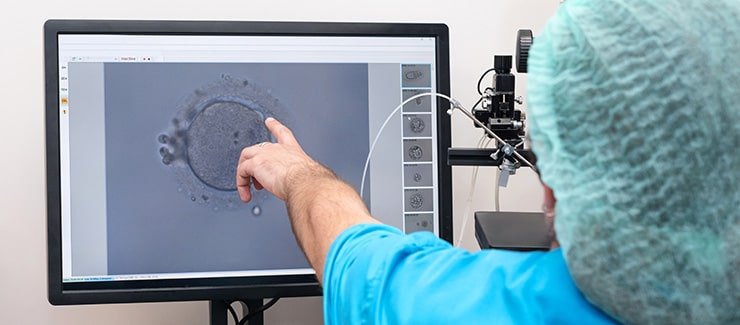
Laboratory Environment
Training introduces participants to:
- Semen processing
- Sperm preparation
- Oocyte identification
- Fertilization techniques
- Embryo assessment
- Culture systems
- Cryopreservation principles
The extent of practical participation depends on professional background, case availability, laboratory protocols and institutional requirements.
Learning Outcomes
After completing the fellowship, participants should have a structured understanding of:
- How an IVF cycle is planned and monitored
- Selection of appropriate ART approaches
- Male and female infertility assessment
- Clinical–laboratory coordination
- IVF and ICSI workflows
- Embryo development and assessment
- Cryopreservation and vitrification
- Management considerations in complex infertility
- Donor and third-party reproduction
- Patient communication and ART practice management
Who Can Apply?
The fellowship is intended for professionals with relevant qualifications in reproductive medicine, gynecology, embryology, andrology or related life-science disciplines.
Relevant Backgrounds Include:
- MBBS
- MD/MS in Obstetrics & Gynecology
- MSc in Life Sciences / relevant embryology disciplines
- Qualified professionals working in reproductive medicine or ART-related fields
Advance Your ART Training
Build a stronger understanding of clinical infertility management, IVF procedures, embryology and ART laboratory practice through an intensive 14-day training experience combining academic instruction, case-based learning and clinical and laboratory exposure.
APPLY NOW