
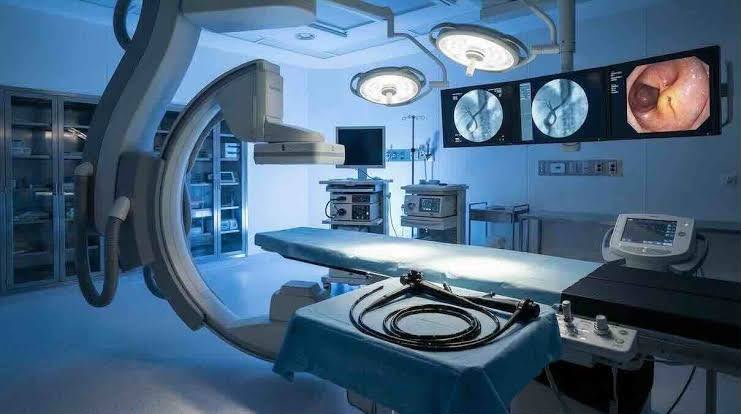
Advanced Biliopancreatic Endoscopy: A Clinical Immersion Programme
Available in two formats: 2-Week Focused Fellowship | 1-Month Comprehensive Fellowship
Endoscopic retrograde cholangiopancreatography (ERCP) is among the most technically demanding and highest-risk procedures in gastrointestinal endoscopy. Safe practice rests on three things: a precise understanding of biliopancreatic anatomy and pathology, disciplined technique, and sound judgement about when to intervene, when to stop and when to escalate.
The Fellowship in ERCP is a hospital-based programme for surgeons, gastroenterologists and physicians who wish to build a rigorous foundation in therapeutic biliopancreatic endoscopy. It is delivered inside a high-volume endoscopy unit and operating theatre, where trainees learn the full ERCP pathway as it unfolds in routine clinical practice.
Programme at a Glance
| 2-Week Focused Fellowship | 1-Month Comprehensive Fellowship | |
|---|---|---|
| Duration | 2 weeks | 4 weeks |
| Setting | Hospital-based endoscopy unit and OT | Hospital-based endoscopy unit and OT |
| Emphasis | Core principles, workflow and technique orientation | Extended clinical immersion, deeper technical and decision-making training |
| Components | Academic teaching, skills laboratory, clinical immersion, case discussion | All of the above, with extended exposure, a structured case log and formative assessment |
| Commencement | First working day of every calendar month | First working day of every calendar month |
| Intake | Limited seats | Limited seats |
Educational Philosophy
ERCP cannot be learned from lectures or recorded procedures alone. The programme is therefore built on clinical immersion: sustained, supervised presence in the live procedural environment, supported by structured teaching and simulation.
Trainees move through five stages:
- Understand. Anatomy, indications, equipment, imaging and evidence-based practice.
- Simulate. Fundamental skills practised in the skills laboratory before and alongside clinical exposure.
- Observe. Full ERCP cases followed from the pre-procedure assessment to recovery.
- Participate. Progressive, faculty-supervised involvement in the procedural team, within the scope permitted by institutional credentialing, patient consent and applicable regulation.
- Integrate. Case-based discussion linking technique to clinical judgement, outcomes and quality.
The Clinical Foundation
The operating theatre and endoscopy suite are the foundation of the fellowship. Trainees are embedded in the ERCP team and follow the complete procedural pathway:
- Pre-procedure clinical review and imaging correlation
- Patient preparation, consent and positioning
- Sedation or anaesthesia planning and intra-procedure monitoring
- Fluoroscopic setup and radiation safety
- Procedural team function and accessory management
- Post-procedure observation, recognition of adverse events and discharge planning
The extent of hands-on participation is determined by each trainee's prior endoscopic experience, faculty assessment and the regulatory framework of the host institution. Allparticipation takes place under direct faculty supervision, with patient safety as the overriding priority.
Curriculum
Module 1: Biliopancreatic Foundations
- Anatomy of the biliary tree, pancreatic ductal system and major papilla
- Anatomical variants, including pancreas divisum and anomalous pancreaticobiliary junction
- Indications and contraindications for diagnostic and therapeutic ERCP
- Role of non-invasive imaging (ultrasound, CT, MRCP) and EUS in patient selection
- Risk stratification and appropriateness of ERCP
- Evidence base and current society guidelines
Module 2: The ERCP Unit: Equipment and Safety
- The duodenoscope: design, elevator mechanism and handling
- Accessories: cannulas, sphincterotomes, guidewires, balloons, baskets, lithotripsy devices, plastic and metal stents
- Electrosurgical units and energy settings for sphincterotomy
- Fluoroscopy systems, radiation protection and the ALARA principle
- Reprocessing and infection control for duodenoscopes
- Staff and patient safety in the ERCP suite
Module 3: Pre-Procedure Assessment and Peri-Procedural Care
- Clinical assessment and indication review
- AInformed consent and counselling, including procedure-specific risks
- Management of antithrombotic therapy and antibiotic prophylaxis
- Sedation and anaesthesia considerations in ERCP
- Prone and semi-prone positioning
- Strategies for prevention of post-ERCP pancreatitis, including rectal NSAIDs, periprocedural hydration and prophylactic pancreatic stenting
- Post-procedure monitoring and early recognition of complications
Module 4: Core Techniques and Therapeutic Principles
- Papillary orientation and approach
- Selective biliary cannulation and guidewire-assisted techniques
- Strategies for difficult cannulation
- Cholangiographic and pancreatographic interpretation
- Endoscopic sphincterotomy and balloon sphincteroplasty
- Management of common bile duct stones, including balloon and basket extraction and the role of lithotripsy
- Biliary drainage: plastic and self-expanding metal stents
- Evaluation and management of benign and malignant biliary strictures
- Bile leaks and post-surgical biliary complications
- Pancreatic indications: chronic pancreatitis, ductal stones and strictures
- Introduction to cholangioscopy and advanced biliopancreatic techniques
Module 5: Adverse Events and Troubleshooting
- Post-ERCP pancreatitis: risk factors, prevention and management
- Post-sphincterotomy bleeding
- Perforation: recognition, classification and management
- Cholangitis and failed drainage
- Cardiopulmonary and sedation-related events
- Escalation pathways and the role of multidisciplinary rescue
Module 6: Skills Laboratory and Simulation
Structured simulator and ex-vivo model practice develops core technical skills before and during clinical exposure:
- Duodenoscope orientation and elevator control
- Papillary alignment and cannulation
- Guidewire and accessory exchange
- Sphincterotomy principles
- Stone extraction and stent deployment
- Coordination between endoscopist, assistant and fluoroscopy
Module 7: Clinical Decision-Making and Quality
- Case-based discussion: indication, timing and choice of intervention
- Selecting between endoscopic, percutaneous and surgical approaches
- Managing difficult biliary access and altered anatomy
- Quality indicators in ERCP: cannulation success, duct clearance, adverse-event rates and documentation
- Reporting, audit and continuous improvement
Programme Structure
2-Week Focused Fellowship
- Week 1: Academic orientation (Modules 1 to 3), skills laboratory introduction, observation of live ERCP lists
- Week 2: Core technique and therapeutic principles (Module 4), supervised participation within the ERCP team, adverse events and case-based discussion (Modules 5 and 7)
1-Month Comprehensive Fellowship
- Week 1: Foundations, equipment, safety and peri-procedural care (Modules 1 to 3); skills laboratory induction
- Week 2: Core techniques (Module 4); intensive simulation; clinical immersion in live ERCP lists
- Week 3: Progressive supervised participation; difficult cannulation, stone management and stenting; adverse events (Module 5)
- Week 4: Complex case discussion, quality and audit (Module 7); structured case log review; formative assessment and faculty feedback
Who Should Apply
- Gastroenterologists and hepatobiliary or general surgeons
- Physicians and trainees with prior diagnostic upper GI endoscopy experience
- Clinicians establishing or expanding a biliopancreatic service
Prior competence in diagnostic upper GI endoscopy is recommended.
Learning Outcomes
On completion, participants will be able to:
- Describe biliopancreatic anatomy and its endoscopic and fluoroscopic correlates
- Select appropriate patients and indications for ERCP
- Identify and manage ERCP equipment and accessories
- Apply peri-procedural safety, radiation protection and infection-control standards
- Explain the principles of cannulation, sphincterotomy, stone clearance and biliary stenting
- Recognise, anticipate and respond to ERCP-related adverse events
- Apply evidence-based reasoning to complex biliopancreatic cases
Why Choose FERCP
- Clinical immersion at the core. Training is anchored in a live, high-volume ERCP environment.
- Structured progression. Academic learning and simulation precede and support clinical exposure.
- Faculty supervision. Experienced endoscopists supervise all clinical participation.
- Safety-first culture. Patient safety, radiation protection and infection control are taught as core competencies.
- Judgement as well as technique. Training addresses when and why to intervene, alongside how.
- Flexible duration. A focused two-week or comprehensive one-month format, starting every month.
Important Information
ERCP competence is acquired over time through a substantial volume of supervised procedures. This fellowship provides a rigorous foundation and structured clinical exposure; it does not by itself confer independent ERCP privileges. The nature and extent of any clinical participation are governed by institutional credentialing, patient consent and applicable medical council and regulatory requirements. A certificate of completion is issued at the end of the fellowship.
APPLY NOW